

Decades
Happy Father's Day to all the men who foster, guide, and protect children, no matter what their relationship is.


1909: My father is born most likely on the family sheep ranch in Woodruff, Utah, a tiny berg five miles from Evanston, Wyoming. Way before the word, suburb, would enter our lexicon. Woodruff is probably a neighborhood of metro Evanston by now. The family has operated this ranch for five generations since the 1880s. Dad told me ‘if you throw a rock around here, you’ll hit a cousin.’
1919: World War l is over, but the Spanish Flu isn’t. Dad is ten years old when he contracts the flu. The doctor tells his mother to open the windows in his room on that wintry day for cross ventilation and feed him some of the tomatoes she put up from the crop Dad grew himself. “He’s gonna die anyway, but we’ll see how this works.” Obviously, he survives and I can tell the tale.
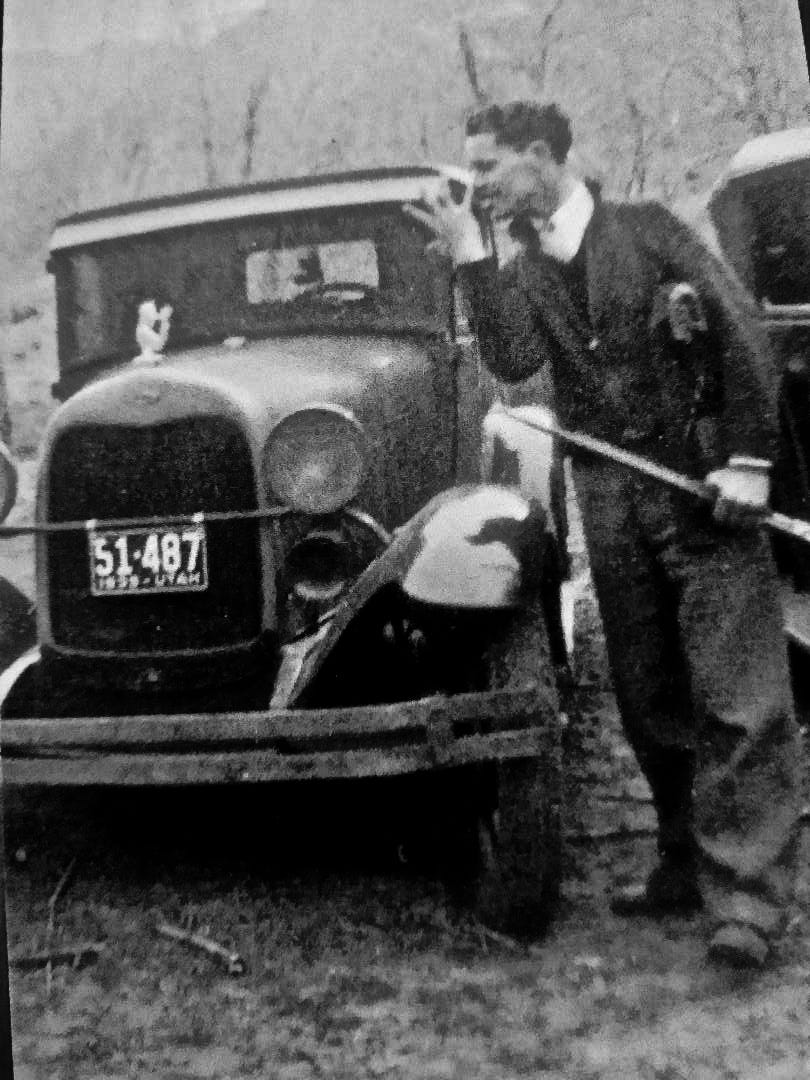
1929: The banks and Wall Street crash. Worldwide depression sucks the life out of families as everyone scrambles to make a living. Dad is twenty and one of the lucky ones who secures a job. As an electrician, he works until he reaches sixty-nine. He told me that a man could buy a Model T for $400, but nobody had $400. Because he had a job, though, he bought a Model A and ferried his buddies on fishing trips, to dances at church or dance halls like the Coconut Grove, which became The Terrace where I attended rock concerts. When they went to the movies, a dime got them two feature films, ten cartoons, a newsreel narrated by Lowell Thomas, and six acts of vaudeville.
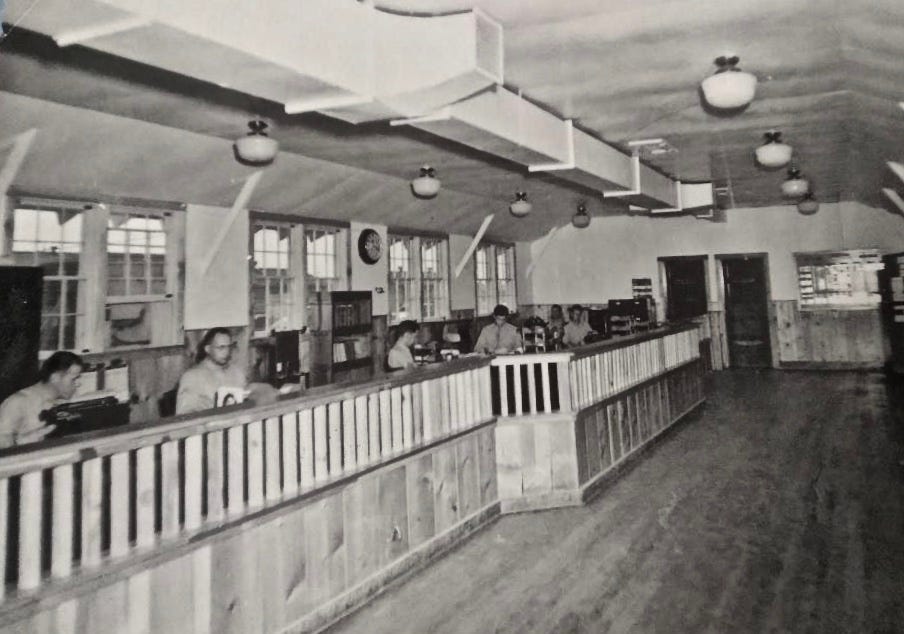
1939: The Germans elect Hitler as their new chancellor and subsequently endure fascist horror until 1945. The entire world falls into this maw of mayhem and death. It dissolves monarchies, changes national borders, and alters the division of labor between American men and women while raising the U.S.A. to a superpower. Mom and Dad marry in 1942 and move to Ajo, AZ where Dad, at age 33, finds his niche in the war machine as a clerk in the paymasters office. My sister is born in Phoenix.


1949: WWII has been over for four years. GIs return home to buy houses for about $5000 and begin the Baby Boom. I was born this year when Dad is forty and re-establishing his life back in Salt Lake City, wiring houses, schools, and high-rise buildings. He and Mom wish they had stayed in Phoenix where they were happy and free from family and Mormon Church expectations. Dad refuses to buy a house and live all his life paying a mortgage. During one visit to Mom’s parents, however, they present three stacks of paperwork for three houses and Grandpa says, “Go look at these and pick one.” Grandma will not allow her daughter to live in rentals for the rest of her life. It was time to set down roots! So, Mom and Dad choose a little house with a picket fence on 19th East and Dad lives there until my sister installs him in assisted living. In that house, Mom and Dad’s marriage begins its long decline into silence during an era when most people, who had survived the Depression and WWII, thrive with robust optimism and affluence. No matter how unhappy couples were behind their growing affluence, divorce was a taboo that would later drive a wedge between generations.
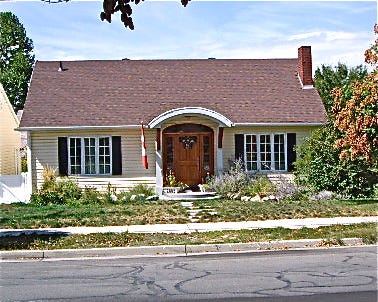
1959: Elvis has served his country and resumes his rock-and-roll career. Frank, Dean, and Sammy rule Las Vegas as the Rat Pack. I turn ten, waking up to the sunny, endless days of summer and the mysterious rattling of windows whenever the Army sets off a nuclear bomb at the Nevada test site. Ensconced in his own house, Dad mows his beautiful lawn and tends his tomato garden with pride. One evening, he comes home and tears down the picket fence, hissing the names Ike and Nixon as he wields the sledge hammer.
I am so proud to watch him stride across his lawn as he returns from work, dressed in grey dungaree and carrying his black lunchbox. There is a phase, though, when he comes home to a child who greets him with “what’d ya bring me, Daddy?” A couple of times, he brings me a simple toy, a balsam glider or a yoyo. One day, he brings home a puppy that I name Corky.

1969: Neil and Buzz walk on the moon and four-days of rock-and-roll in Woodstock, NY shifts the cultural and musical dial. Dad discovers me browsing the beads at a hippie shop across the street from the art film theater. Dragging me out of the store, he gripes about the stink in the place. “It’s incense, Dad.” “No, it ain’t!” When I come home early one morning after attending a rock concert, he realizes his little girl has become a groupie. “I can’t believe it. I just can’t believe it.”
I want to go to college, but the U. of U., with its sit-ins and commie upheaval is off the table. Mom, who now works as a nurse, will only pay my tuition at BYU. Unfortunately, my bishop won’t give me the required recommend to go there. I am relieved. Mom is devastated because I am the only cousin not attending BYU. Dad just asks, “Why do you need to go to college anyway?” After all, he never did and has succeeded in a career he loves.
1979: Mom has died of ovarian cancer, most likely caused by the above-ground nuclear tests in Nevada. I want to move to California like all my cousins have done. Dad drives a poorly-maintained rental truck with all my stuff, following me across the Great Basin, the Sierra Nevada, and over the treacherous Hwy 17 between San Jose and Santa Cruz during a rainstorm. I almost lose him when a car careens from a mountain road right in front of him. I watch in the rearview mirror as he slides and swerves to avoid collision. He survives, though, and for a few days, helps me find an apartment. He remarks how well I know my way around the tangled roads of Santa Cruz. I can’t tell him I’d already explored the place with my boyfriend only a week before we left Salt Lake. As we hug goodbye and he walks alone to the gate at the San Jose Airport, I can’t wait to visit a friend in San Francisco. Before I leave, though, he returns. The plane is delayed an hour. So we have more time to hold hands and contemplate our parting. Then we repeat the bitter-sweet farewell and I watch his plane taxi to the runway. He is going back home to an empty house and I have a new life to build.
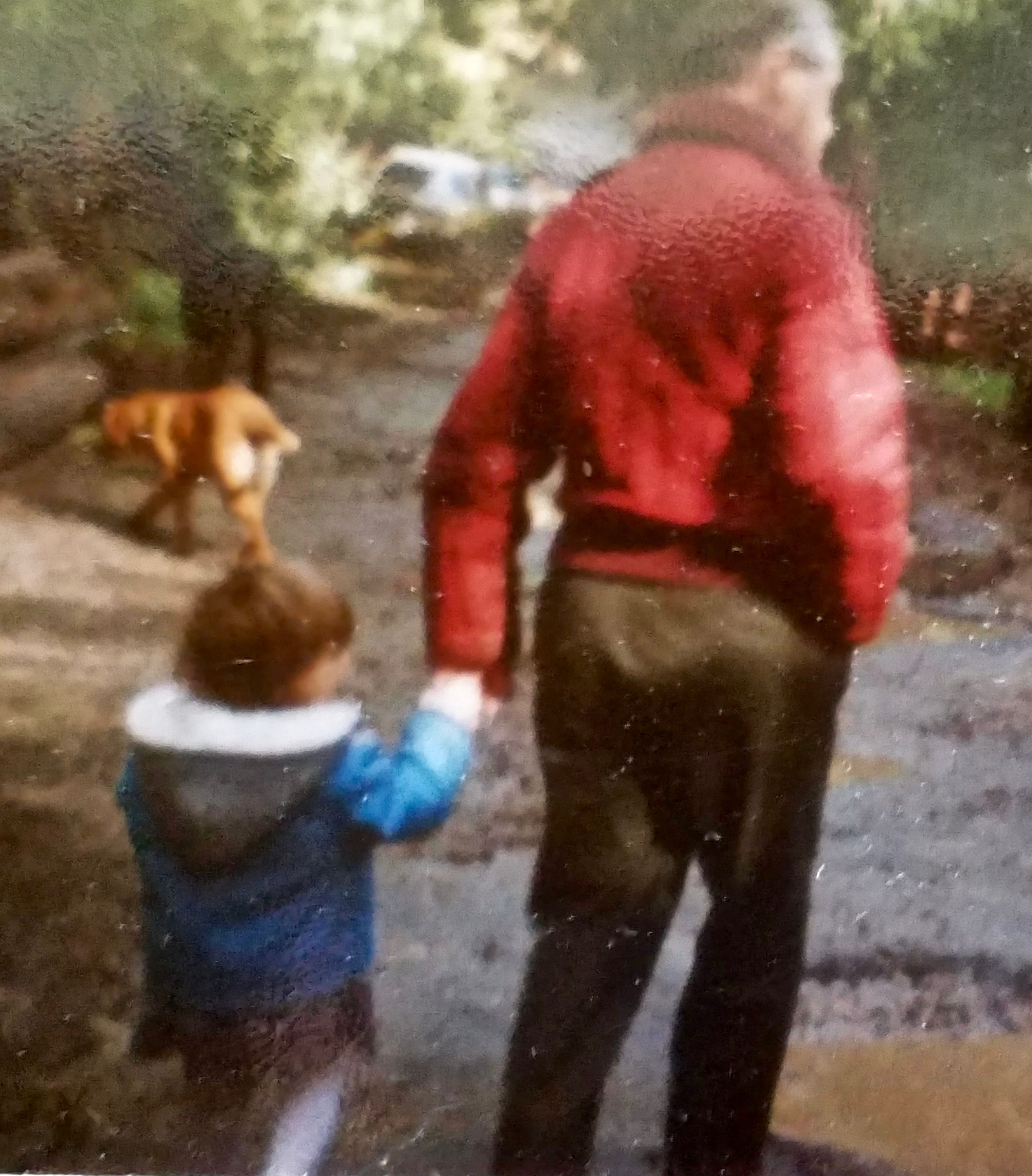
1989: He meets my daughter, Valerie, when he visits us in our Boulder Creek house. It rains most of the week, but the sun comes out the morning he leaves. I guess it is always raining in Santa Cruz as far as he is concerned. Why should he pull up stakes to join me when Salt Lake provides wall-to-wall sunshine most of the time? We keep in touch by monthly phone calls that last over an hour, At one point, I apologize for all the stupid, crazy things I’ve done that I know hurt him. He says, “You didn’t do anything that wasn’t all about growing up.” After one of our brief visits to Salt Lake, I watch him walk toward the airport parking lot and, for some reason, wonder if I’ll ever see him again.

1994: Despite those long-distance phone calls and visits, I am surprised how quickly he loses his cognitive abilities along with his physical vitality. Leaving his nursing home before boarding a plane, I wave goodbye as he slumps in a huge lounge chair, a tiny, frail man whose eyes accuse me for breaking my promise to take him to Truckee. He wants so much to run away from his fate. It haunts me to this day, even though my sister convinced me that I couldn’t give him the care he needs. A month later, we bury him next to Mom at the age of 85.
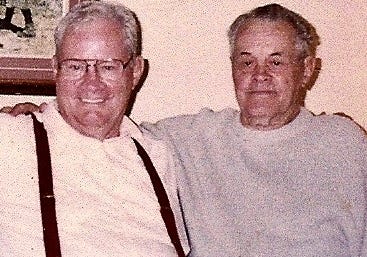
The only positive thing about losing my father is developing a relationship with my Uncle Harvey, who guided us through the funeral process. Mom wouldn’t allow him in our house because she didn’t approve of his lifestyle and rebellion against the Church. For years, I enjoyed monthly calls with Harvey, who filled me in on family history and shared all the experiments he did in his gardens. A truly marvelous, funny man, he became my surrogate father. I miss both of these men and hope, if all the mythology holds true, they will greet me when it’s my turn to walk through that veil.

The relationship between a girl and her father is critical to her emerging womanhood. Here’s a previous Father’s Day story about my husband, Jeff, and daughter, Val, as they navigate her childhood together: There’s a Lot to Being a Dad.
There's a Lot to Being a Dad

That first year with a first baby has its challenges and adjustments, but Jeff aced them all without so much as a flinch.
Thank you to all my subscribers old and new, followers, and the lovely, timid folk who read my scribblings as if by flashlight under the covers. It gives me a buzz to post my stories and poems and share my world with you.
If you enjoy what you read here, feel free to explore the Ring Around the Basin Archive. I would love to read your comments, so please share your thoughts. Let’s start a conversation.
I also invite you to subscribe or upgrade to a paid subscription. It’s only $50/year. As a paid subscriber, you will not only have access to all posts and Archives, but you can read Paradise Ridge, my serialized novel posted every Saturday.
And please check out my books on Amazon.
Thank you so much for your support!
I like the way you presented this family history in succeeding decades. As the Book says, "For every thing there is a season, and a time for every purpose...
Thanks for these real life family memories, Sue.